
Embark on a journey into the realm of market research for small businesses, where informed decisions pave the way for success. Explore the importance, methods, and utilization of market research in this dynamic landscape.
Importance of Market Research for Small Businesses
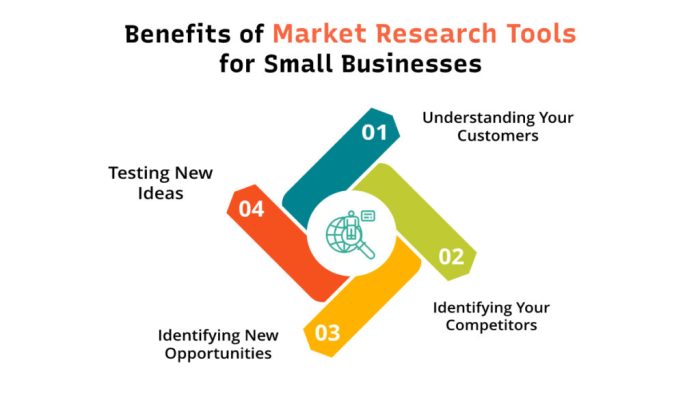
Market research is crucial for small businesses as it helps them gather valuable insights about their target market, competitors, and industry trends. By conducting thorough market research, small businesses can make informed decisions that can lead to strategic growth and sustainability.
Understanding Customer Needs
Market research allows small businesses to understand the needs and preferences of their target customers. By collecting data on consumer behavior, purchasing patterns, and feedback, businesses can tailor their products or services to meet customer demands effectively.
- Identifying new market opportunities
- Developing products/services that align with customer preferences
- Creating targeted marketing campaigns
Evaluating Competitors
Through market research, small businesses can analyze their competitors’ strategies, strengths, and weaknesses. This information can help businesses differentiate themselves in the market and develop competitive advantages.
- Identifying gaps in the market
- Setting competitive pricing strategies
- Improving product quality and customer service
Forecasting Industry Trends
Market research enables small businesses to stay ahead of industry trends and adapt their strategies accordingly. By monitoring market dynamics, technological advancements, and consumer preferences, businesses can anticipate changes and proactively adjust their operations.
- Adopting new technologies to enhance efficiency
- Expanding to new markets based on emerging trends
- Anticipating shifts in consumer behavior
Types of Market Research Methods
Market research for small businesses can be conducted using various methods, each with its own set of advantages and disadvantages. It is important for small business owners to understand these methods in order to make informed decisions regarding their marketing strategies.
Surveys and Questionnaires
Surveys and questionnaires are traditional market research methods that involve collecting data from a target audience through structured questions.
- Advantages:
1. Cost-effective way to gather feedback from a large number of respondents.
2. Can be easily distributed both online and offline. - Disadvantages:
1. Response rates may be low, leading to potential bias in the results.
2. Limited depth of information compared to other methods.
Focus Groups
Focus groups involve gathering a small group of individuals to discuss specific topics related to the business or product.
- Advantages:
1. Provides qualitative insights into consumer opinions and preferences.
2. Allows for in-depth discussions and exploration of ideas. - Disadvantages:
1. Can be time-consuming and expensive to organize.
2. Results may not be generalizable to a larger population.
Data Analytics and Social Media Monitoring
Modern digital techniques include using data analytics tools to track online consumer behavior and sentiments through social media monitoring.
- Advantages:
1. Real-time insights into consumer trends and preferences.
2. Can track customer engagement and sentiment towards the brand. - Disadvantages:
1. Requires technical expertise to analyze and interpret data.
2. Privacy concerns related to collecting and analyzing user data.
Comparing Traditional vs. Modern Methods
Traditional market research methods like surveys and focus groups provide valuable qualitative data, while modern digital techniques offer real-time insights and a broader reach. Small businesses can benefit from a combination of both methods to gain a comprehensive understanding of their target market.
Conducting Market Research
Market research is a crucial step for small businesses to understand their target market, competition, and industry trends. Here, we will detail the steps involved in conducting effective market research for small businesses.
Steps in Conducting Market Research
- Define the objectives: Clearly Artikel what the business wants to achieve through market research.
- Identify the target market: Determine who the ideal customers are and their characteristics.
- Choose research methods: Select appropriate methods such as surveys, focus groups, or interviews.
- Collect data: Gather relevant information from primary and secondary sources.
- Analyze the data: Interpret the findings to draw meaningful insights.
- Implement changes: Use the insights to make informed decisions and improve business strategies.
Sample Market Research Plan
For a small bakery looking to expand its customer base, the market research plan could include:
- Objective: Understand customer preferences and increase sales.
- Methods: Surveys, taste tests, and competitor analysis.
- Data Collection: Conduct surveys in-store, organize taste tests with focus groups, and research competitor pricing strategies.
- Data Analysis: Compare survey responses, evaluate taste test feedback, and identify trends in competitor offerings.
- Implementation: Introduce new products based on customer feedback, adjust pricing strategies, and promote unique selling points.
Data Collection and Analysis Methods
Organizing the data collection process and analysis methods is essential for effective market research:
- Data Collection: Use online surveys, in-person interviews, and observation techniques to gather information.
- Data Analysis: Utilize statistical tools, spreadsheets, and data visualization techniques to interpret the data accurately.
- Interpretation: Draw conclusions based on the analyzed data and identify actionable insights for business decision-making.
Market Volatility and Its Impact on Small Businesses
Market volatility can have a significant impact on small businesses, affecting their ability to predict and plan for the future. Uncertainty in the market can lead to fluctuations in demand, supply chain disruptions, and changes in consumer behavior, all of which can directly impact the operations and profitability of small businesses.
Strategies to Navigate Market Volatility
Small businesses can implement several strategies to navigate market volatility successfully. One effective approach is to conduct regular market research to stay informed about industry trends, consumer preferences, and competitive landscapes. By understanding market dynamics, small businesses can adapt their products, services, and marketing strategies to meet changing demand and stay ahead of the competition.
- Diversification: Small businesses can reduce their exposure to market volatility by diversifying their product offerings, target markets, and revenue streams. This can help mitigate the impact of fluctuations in any one area of the business.
- Agility: Being agile and responsive to market changes is crucial for small businesses. By quickly adjusting their strategies, small businesses can capitalize on emerging opportunities and mitigate risks posed by market volatility.
- Financial Planning: Maintaining a strong financial position and managing cash flow effectively can help small businesses weather periods of market volatility. Having a financial buffer can provide stability during uncertain times.
Examples of Successful Adaptation
One example of a small business that successfully adapted to market volatility through market research is a local bakery that diversified its product line based on customer feedback and market trends. By introducing new specialty items and adjusting pricing strategies, the bakery was able to attract a broader customer base and increase sales, despite fluctuations in the market.Another example is a boutique clothing store that leveraged market research to identify emerging fashion trends and adjust its inventory accordingly.
By staying ahead of the curve and offering unique, in-demand products, the store was able to differentiate itself from competitors and maintain a loyal customer base, even during challenging economic conditions.
Utilizing Market Research Data
Market research data can be a valuable asset for small businesses looking to improve their products or services. By analyzing consumer preferences, trends, and feedback, businesses can make informed decisions that cater to their target market’s needs effectively.
Improving Products or Services
Utilizing market research data, small businesses can identify areas for improvement in their products or services. By understanding customer preferences, pain points, and expectations, businesses can make adjustments to enhance the overall quality and value proposition of their offerings.
- Implementing product enhancements based on customer feedback
- Introducing new features or services to meet emerging market demands
- Optimizing pricing strategies to align with customer perceptions of value
Identifying New Business Opportunities
Market research data can also help small businesses identify new business opportunities within their industry or target market. By analyzing market trends, competitor strategies, and consumer behavior, businesses can uncover untapped market segments or niche markets to explore further.
- Spotting gaps in the market for innovative products or services
- Identifying emerging trends that present growth opportunities
- Evaluating competitor offerings to differentiate and position the business uniquely
Shaping Marketing Strategies
Market research data plays a crucial role in shaping small businesses’ marketing strategies. By understanding consumer preferences, behavior patterns, and communication channels, businesses can develop targeted marketing campaigns that resonate with their target audience effectively.
- Creating personalized marketing messages that speak to customer needs and aspirations
- Selecting the most effective marketing channels to reach and engage the target market
- Optimizing advertising campaigns based on consumer feedback and market trends
In conclusion, market research equips small businesses with the tools to navigate market volatility, identify opportunities, and shape effective marketing strategies. Dive into the world of data-driven decision-making and watch your business thrive.
FAQ
How can market research benefit small businesses?
Market research helps small businesses make informed decisions, understand their target market, and identify new opportunities for growth.
What are some common methods of market research for small businesses?
Common methods include surveys, focus groups, interviews, and data analysis. Each method has its advantages and disadvantages.
How can small businesses leverage market research data effectively?
Small businesses can use market research data to improve products/services, identify trends, and tailor marketing strategies to meet customer needs.


